How Mood Tracking Helps You Understand Yourself Better
Mood tracking is more than a wellness trend. Learn how logging your emotions reveals patterns, improves emotional intelligence, and helps you make better decisions.
What Is Mood Tracking?
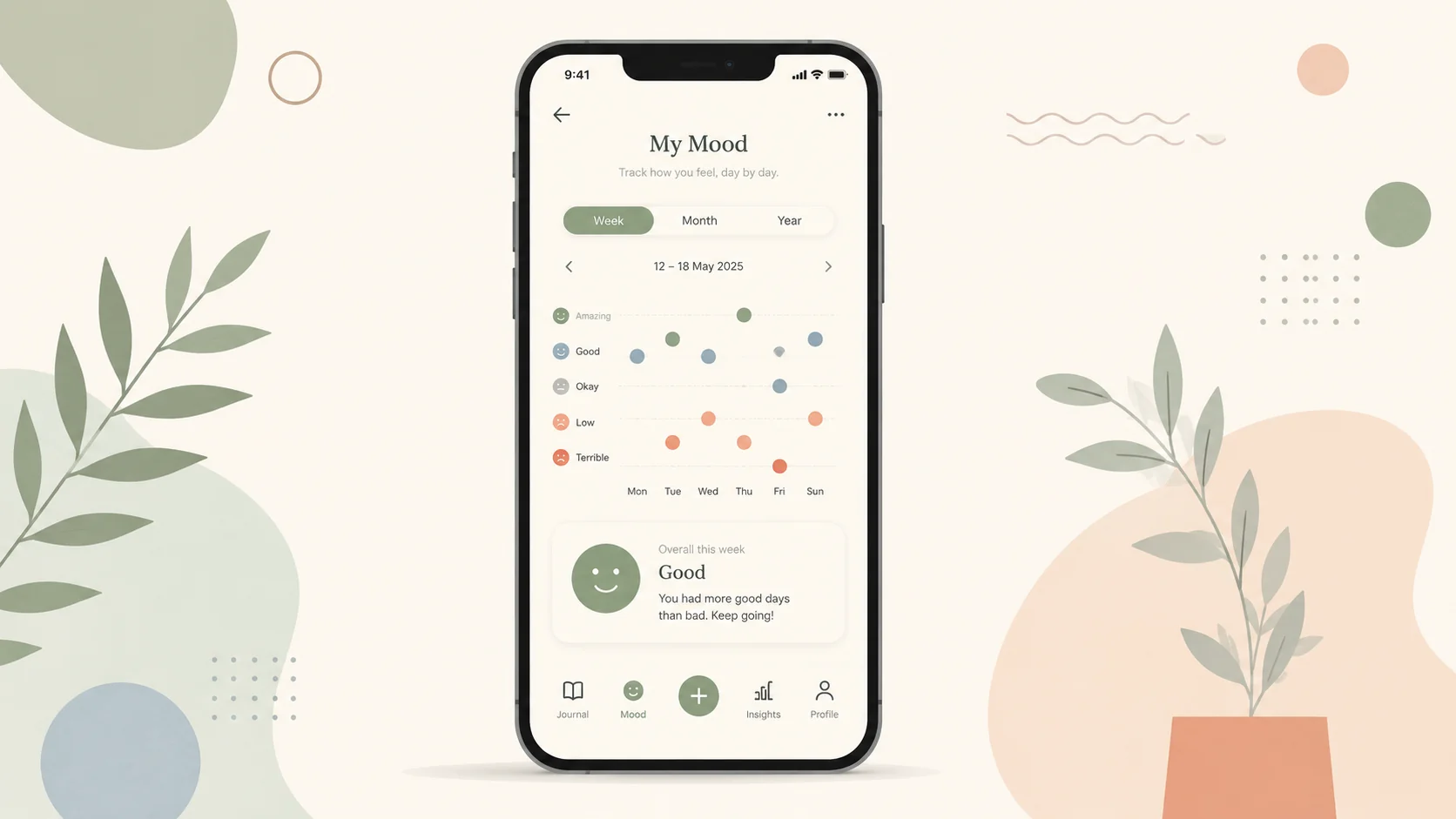
Mood tracking is the simple act of regularly noting how you feel — usually a few times a day or once in the evening. You might rate your mood on a scale, pick an emoji, or write a short note about what influenced it.
It sounds almost too simple to work. But the data it creates over time is surprisingly powerful.
The Science Behind It
The mechanism is well-studied: naming an emotion reduces its intensity. Neuroscientists call this "affect labelling." In a widely-cited UCLA neuroimaging study (Lieberman et al., 2007, *Psychological Science*), simply putting a feeling into words — "I feel anxious because of a deadline" — measurably calmed the amygdala's fear response while activating the prefrontal cortex, the brain region responsible for rational thought. The effect showed up from labelling alone, with no other intervention.
Mood tracking is affect labelling made into a daily habit. Every logged entry is a small, repeated dose of the same mechanism.
What Mood Tracking Reveals
After a few weeks, patterns emerge that are invisible in the moment:
How to Start
Mood Tracking vs Therapy
Mood tracking is not therapy. It doesn't replace professional help for clinical conditions. But it's a powerful self-awareness tool that:
Track Your Mood in Mindleau
Mindleau's Mood Check-in takes under 60 seconds: a quick morning or evening entry with a mood, an energy level, and an optional influence tag (Sleep, Work, Social, Body) — the same context-tagging habit described above. Every check-in links to your brain dumps and guided stillness sessions from the same day, so the full picture of what shaped your mood is in one place, not scattered across separate apps.
Over the following weeks, the Insights tab turns those entries into a 30-day mental weather heatmap — a color-coded calendar of your reflection activity that makes day-of-week patterns and recovery speed visible at a glance, plus streak and growth metrics that show whether the habit itself is sticking. All of it stays local-first on your device.
Try Mindleau free
Brain dumps, guided stillness, mood tracking, and insights — all in one calm app.