Free vs Paid Mindfulness Apps: What You Actually Need in 2026
Headspace, Calm, and other mindfulness apps charge $70/year. Do you actually need a paid subscription? Here's what free apps offer and when paid makes sense.
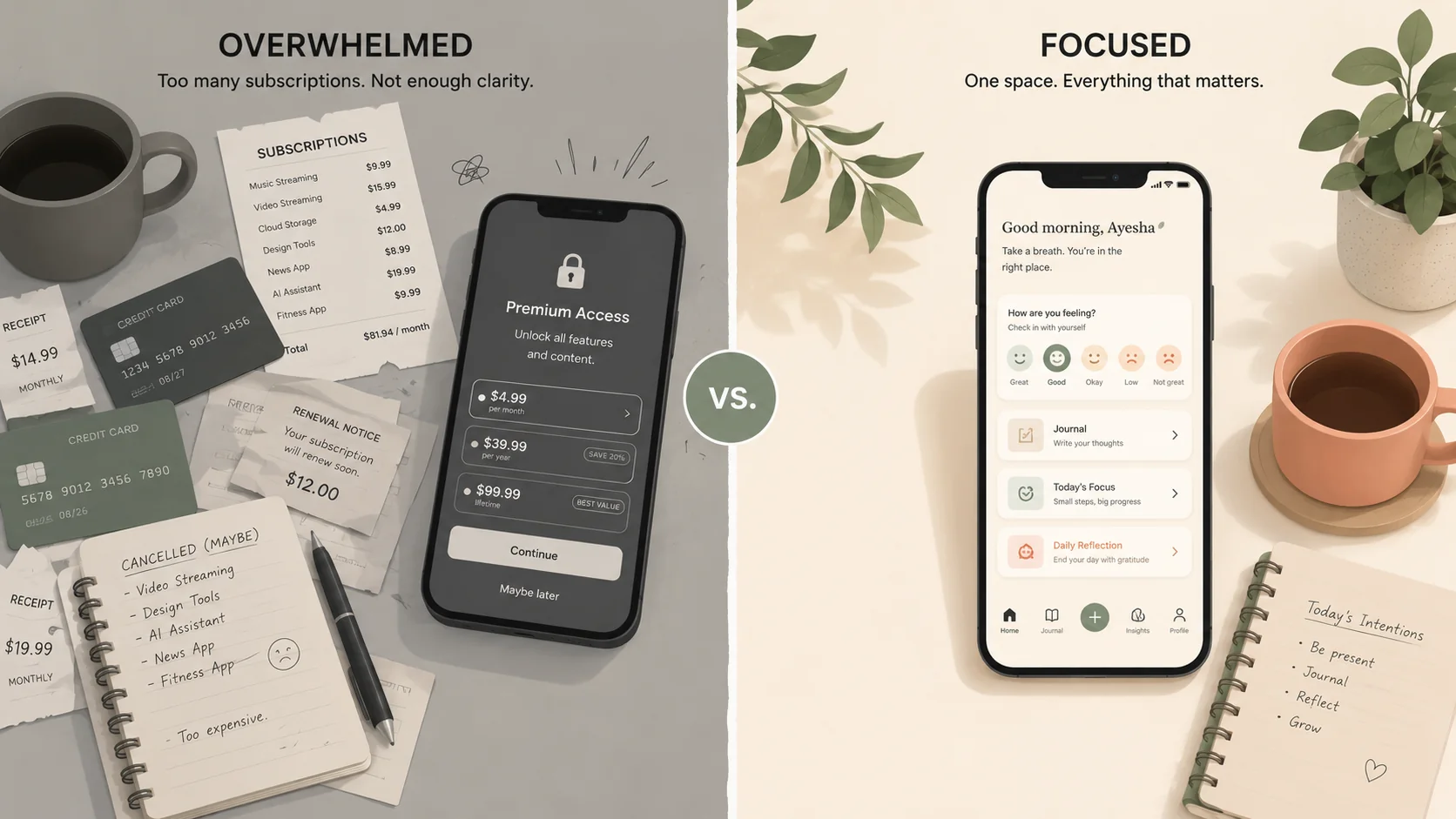
The Subscription Fatigue Problem
The average American pays for 12+ subscriptions. Adding another $70/year for a meditation app feels reasonable — until you realise you used it twice in January and not at all since.
Paid mindfulness apps like Headspace ($69.99/year) and Calm ($69.99/year) offer vast libraries of guided content. That's genuinely valuable if you use it. But most people don't maintain a daily practice long enough to justify the cost.
What Free Apps Actually Offer
The best free mindfulness apps in 2026 focus on core functionality rather than content volume:
| Feature | Free Apps | Paid Apps |
|---|---|---|
| Guided sessions | Limited but solid | Hundreds of hours |
| Brain dump / journaling | Often included | Rarely included |
| Mood tracking | Usually included | Sometimes extra |
| Offline access | Yes | Yes |
| Data privacy | Often better (less tracking) | Varies |
| Cost | $0 | $50–70/year |
When Free Is Enough
When Paid Makes Sense
What to Look For in a Free App
Mindleau: Free, Complete, Private
Mindleau combines brain dumps, a 7-day guided stillness journey, mood reflection, and a 30-day insights dashboard. No subscription. No account required. Local-first. Free on iOS and Android.
Common Questions
Do I need to pay for a meditation app to see any benefit?
No. The core mechanisms behind mindfulness apps — a few minutes of guided breathing, writing down your thoughts, checking in on your mood — don't require a large paid content library to work. A free app that covers those basics consistently will do more for you than an expensive app you open twice.
What's the real difference between Headspace/Calm and a free app like Mindleau?
Headspace and Calm are primarily content libraries: hundreds of hours of guided meditations, sleep stories, and courses, produced to a high standard. Mindleau is built around a smaller set of daily tools — brain dump, guided stillness, mood check-in, insights — used together instead of browsed. Neither approach is objectively better; it depends on whether you want to explore a large library or build a short daily habit.
Is it worth paying for Headspace or Calm later, once I have a habit?
That's a reasonable time to reconsider. Once a daily practice is established, a bigger content library has more to offer than it does to a beginner. There's no need to decide that on day one.
Try Mindleau free
Brain dumps, guided stillness, mood tracking, and insights — all in one calm app.