Brain Dump App vs. Paper Journal: Which Actually Helps More?
A paper journal and a brain dump app do the same basic thing — get thoughts out of your head. Here is an honest comparison of what each is actually better at.
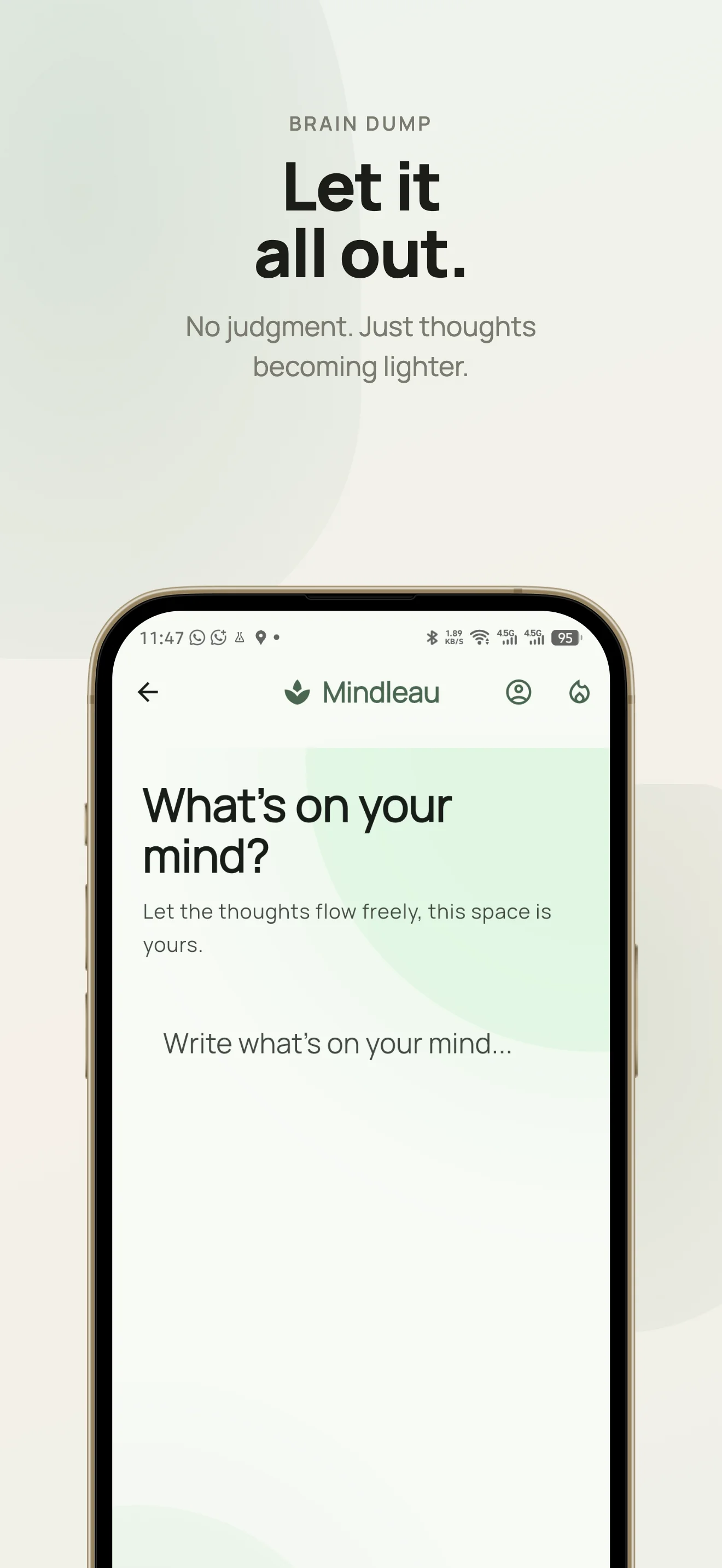
Same Idea, Different Tool
A paper journal and a brain dump app are doing the same fundamental thing: getting thoughts out of your head and onto something external, so your brain can stop holding onto them. Neither one is a gimmick — the mechanism behind both is the same well-documented psychology of externalising mental clutter.
The honest answer to "which is better" is: it depends what you do with it afterward. Here's where each one actually has the edge.
What Paper Does Better
If any of that matters more to you than what's below, paper is the right tool. There's no prize for doing this digitally.
What a Brain Dump App Does Better
The Privacy Question, Honestly
The fair worry about a digital journal is: who else can read this? Mindleau's answer is local-first storage — entries live on your device first, full stop. Optional cloud sync exists for people who want their history if they change phones, but it's opt-in, and journal content is never sold or shared with advertisers. See the Privacy Policy for the specifics. That's not the same privacy model as a paper notebook in a drawer, but it's a considered one, not an afterthought.
So Which One?
If you already keep a paper journal and it's working, this isn't an argument to stop. The two aren't mutually exclusive — plenty of people brain dump digitally in the moment and keep a slower, reflective paper journal separately. If you don't currently journal at all because paper has never stuck, a five-minute digital habit that fits in your pocket and shows you patterns after a few weeks is worth trying before deciding journaling "isn't for you."
Common Questions
Is a digital brain dump as effective as writing on paper?
For the core benefit — getting thoughts out of your head so your brain can stop holding onto them — yes, the mechanism is the same regardless of medium. Paper has an edge for people who think better away from a screen; a digital app has an edge for search, tagging, and pattern-spotting over time.
Can I use both a paper journal and a brain dump app?
Yes, and many people do — a quick digital brain dump in the moment something happens, plus a slower, more reflective paper journal at a set time of day. They serve slightly different needs.
Is it safe to keep a private journal in an app?
It depends on the app's data practices. Mindleau stores entries locally on your device first, with optional cloud sync, and never sells or shares journal content with advertisers — see the Privacy Policy for details. Check any app's actual privacy policy before trusting it with personal reflections.
Try Mindleau free
Brain dumps, guided stillness, mood tracking, and insights — all in one calm app.